





Down duvets: why do some cost 4,000 lei and others 13,000? The difference you need to know
- Catalog: Duvets
- Categories:
- Views: 6091
You're looking for a high-quality down duvet. You go online and see that one store sells it for 4,000 lei, while another asks 13,000. At first glance, they look the same: white, soft, and labeled "down." Naturally, you wonder — what's the difference, and why pay four times more?
We’ll explain it simply, honestly, and with clear facts — what sets an affordable duvet apart from a truly premium one, and why the higher price is based on real, tangible qualities. Even if, on the surface, they may look identical.

1. Not all down is the same: recycled or virgin?
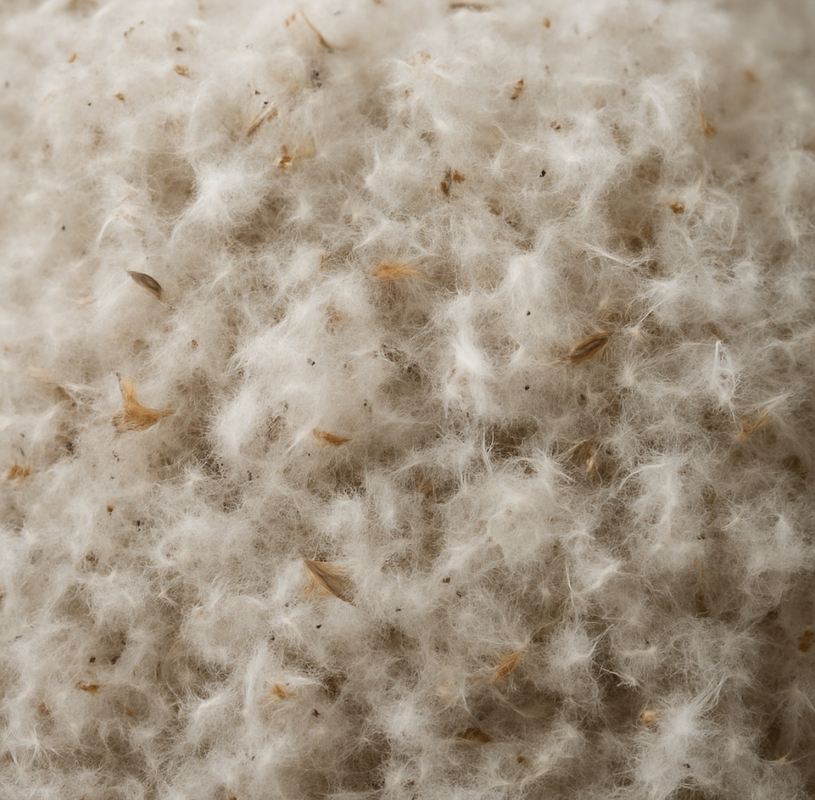
Affordable duvets often contain recycled down — meaning it has already been used before. It’s washed, dried, chemically treated, and stuffed back into duvets. But its structure is damaged, and this isn’t just a minor detail.
What happens with recycled down:
- It clumps quickly, and the duvet loses its shape within 6–12 months;
- It insulates poorly and doesn’t allow the skin to breathe;
- It may trigger allergies, as it absorbs moisture and bacteria.
At Juliet Rose, all our duvets (such as DaunenStep and Brinkhaus) are filled with premium virgin goose down, Class I. It is:
- Collected by hand;
- Gently cleaned without aggressive chemicals;
- Certified according to OEKO-TEX® and NOMITE® standards — guarantees safety and hypoallergenic properties,
- Provides comforting warmth — like a “cloud wrapped around your body.”

2. Stitching and structure: a duvet that keeps its shape
Budget duvets often use basic stitching — straight lines or zigzags. After a few washes, the down shifts to one corner. The center becomes empty, and you start feeling cold — even under a "down" duvet.
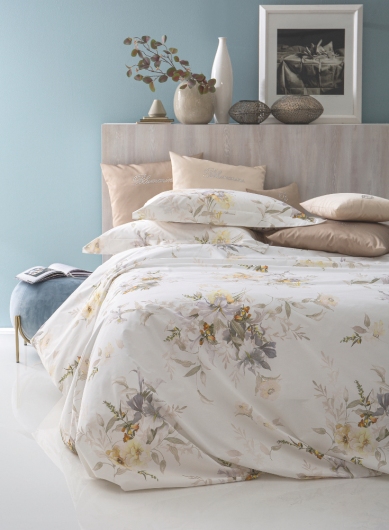
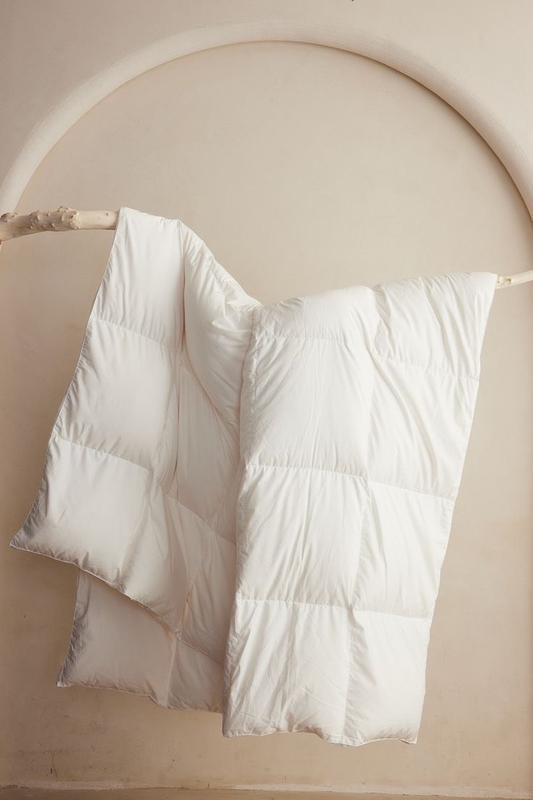
Premium duvets are always made with box stitching (also known as baffle-box construction). This means the down is sealed in evenly distributed compartments — like a mosaic — so it can’t shift or clump. This technique helps the duvet maintain its shape for years. You’ll feel the difference after just one night.
3. The cover: breathability and allergy protection
You might not notice it right away, but it’s not just the down that breathes — the fabric matters too. In cheaper duvets, synthetic materials or coarse cotton are commonly used. These fabrics:
- trap heat and moisture — creating a greenhouse effect and a “heavy” sleep,
- wear out quickly — allowing down to leak after a year,
- don’t protect against dust, mites, or humidity.
In DaunenStep and Brinkhaus duvets, only fine batiste or high-quality cotton sateen (300–400 TC) is used. This fabric:
- breathes and wicks moisture away from the body,
- shields against dust and allergens,
- feels luxuriously soft — like the finest silk against the skin.


Products

4. Filling: density, warmth, and lightness
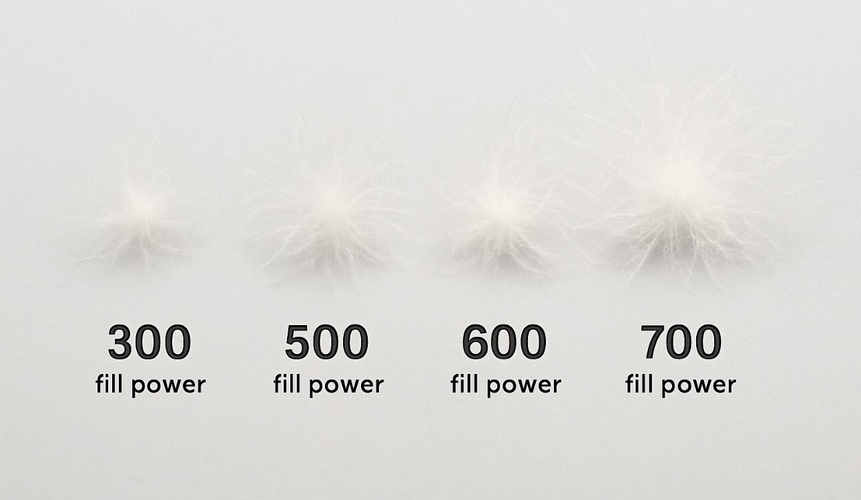
The most important indicator of down quality is the Fill Power. It measures how lofty and resilient the down is — and how well it traps air and warmth.
In budget duvets, Fill Power is often around 300–400 — they may feel warm at first, but the effect fades.
In premium duvets, the Fill Power starts at 700 and can reach 800+. This means the duvet is lightweight yet warmer and naturally regulates temperature: never too hot in summer, never too cold in winter.
You feel like you're wrapped in a "blanket of air" that still keeps you consistently warm. That’s the real difference.
5. Origin and craftsmanship: how true premium is made
Yes, you can buy a factory-made Turkish duvet and use it for a couple of seasons. But the brands we work with at Juliet Rose offer something entirely different — a better quality of life.
For example:
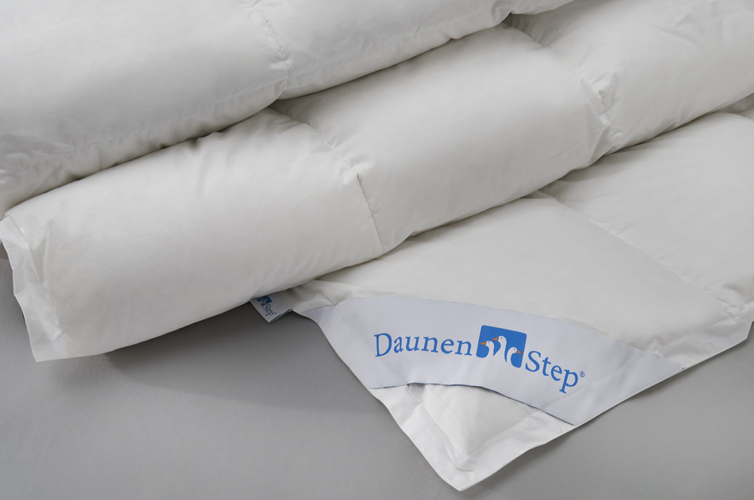
DaunenStep (Italy) – a family-run company from South Tyrol, where every duvet is handcrafted with care and precision.
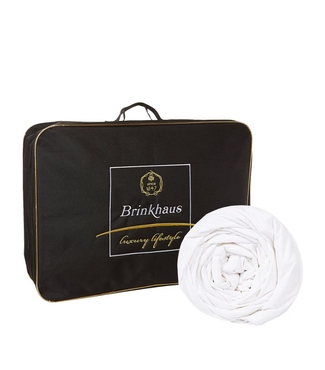
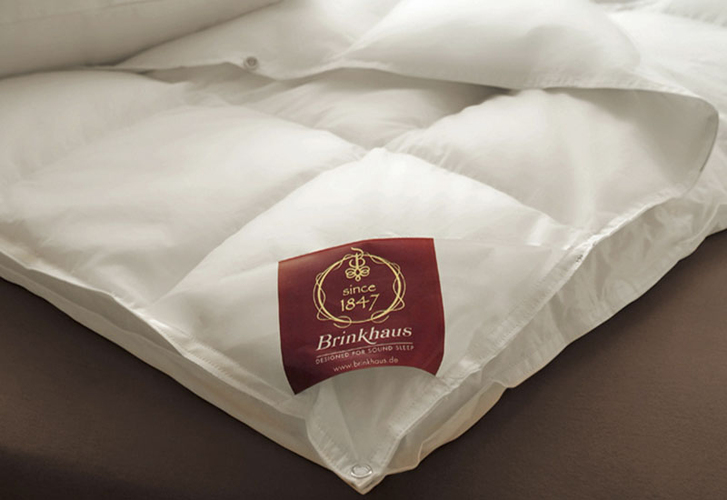
Brinkhaus (Germany) – over 170 years of expertise, using only certified materials sourced from Europe.
These brands never cut corners and don’t chase mass production. Their duvets and pillows are like Swiss watches: expensive, because they are precise, pure, and built to last.
Products

6. Lifespan: a one-time purchase for 10 years
A budget duvet needs to be replaced every 1–2 years. It loses its shape, warmth, and becomes uncomfortable. In the end, you pay the same — just spread out over time and accompanied by constant compromise.
A premium duvet, with proper care, lasts 10 years or more. It doesn’t need replacing, stays soft, clean, and always feels “like new.” And most importantly, it gives you a quality of life you can’t see on the packaging — but you feel it, every single night.
And most importantly: you’re not paying for the brand — you’re paying for health and comfort
When you spend 13,000 lei on a duvet, you're not paying “for the name.” You’re paying for:
- a natural, hypoallergenic and eco-friendly material,
- absolute comfort and proper temperature regulation,
- a lightness that doesn’t weigh you down — it gently embraces you.
Conclusion: the difference between budget and premium isn’t the packaging — it’s the result
Yes, on the outside everything may look the same. But inside — these are entirely different products.
If you care about your sleep and want to invest once in something truly good, choose premium. It won’t disappoint, won’t wear out, and will stay with you for years to come.
At Juliet Rose, we’ve carefully selected the finest European brands — so you don’t have to waste time searching or settling for less.
Ready to feel the difference?
Explore our collection of down duvets and pillows and choose the perfect set — for yourself or as a meaningful gift.


 Developed in ilab.md